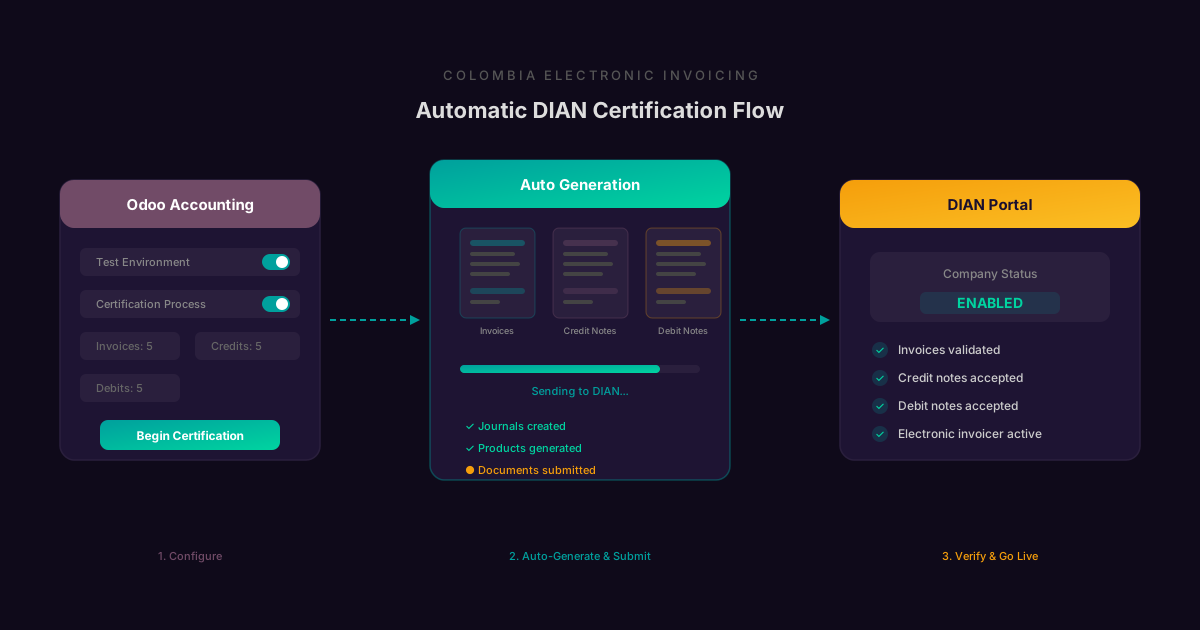
Getting certified as an electronic invoicer in Colombia has never been pleasant. The DIAN — Colombia’s tax authority, the Dirección de Impuestos y Aduanas Nacionales — requires businesses to submit a specific number of valid customer invoices, credit notes, and debit notes to a certification environment before they’re allowed to issue electronic invoices in production. It is a multi-step process that typically involves manual document creation, XML formatting, digital signature configuration, and repeated portal visits to check validation status.
Odoo has compressed all of that into a single button. The latest update to the Colombian localization module adds an automatic DIAN enablement process that generates every required document, submits them to DIAN’s certification environment, and reports back the validation results — all from within Odoo’s Accounting settings. No switching between platforms, no manually crafting test invoices, no XML editing.
How the Certification Process Worked Before
To become an authorized electronic invoicer under DIAN’s Own Software solution, Colombian businesses had to produce a set of compliant documents — typically five customer invoices, five credit notes, and five debit notes — and submit them to DIAN’s test environment. Each document needed the correct fiscal resolution, proper XML structure, valid digital signatures, and matching tax calculations.
For most businesses, this meant hiring a consultant or spending days inside the DIAN portal trying to get every field right. A single validation error — a mismatched tax ID, an incorrect resolution number, a malformed XML tag — would reject the entire submission and force the process to restart. The time between starting the certification attempt and getting the green light from DIAN often stretched from days into weeks.
The New Flow: Configure, Click, Verify
The automated process starts in Accounting → Configuration → Settings, where two new checkboxes appear under the Colombian localization section. The first enables the test environment — telling Odoo to route documents to DIAN’s certification sandbox rather than the production system. The second activates the certification process itself.
Below those toggles, you specify how many documents DIAN requires for each type: invoices, credit notes, and debit notes. The numbers depend on DIAN’s current requirements, which can vary, so the fields are configurable rather than hard-coded.
Then you click Begin Certification Process and let Odoo do the rest.
What Happens Behind the Scenes
When the process starts, Odoo automatically creates journals, products, and the full set of required documents. These aren’t placeholder records — they’re fully formed invoices, credit notes, and debit notes with valid fiscal data, proper tax calculations, and correct digital signatures. The system then submits each document to DIAN’s certification environment through the API.
As documents are processed, you can monitor the validation status from within Odoo. Each generated document includes a DIAN tab where you can see whether DIAN accepted or rejected the submission, along with any error details if something went wrong. In practice, the auto-generated documents are structured to pass validation on the first attempt, since Odoo knows exactly what format DIAN expects.
Going From Test to Production
Once all required documents have been submitted and validated, the final step is confirming that your company’s status shows “Enabled” in the DIAN portal. This is the one part of the process that still requires a manual check — you log into the DIAN website and verify that your business is listed as an authorized electronic invoicer.
After confirming the status, you switch the test environment toggle off in Odoo’s settings, and the system starts routing documents to DIAN’s production environment. From that point forward, every invoice, credit note, and debit note created in Odoo is automatically validated against DIAN in real time.
The Recommended Approach: Test Database First
One detail worth noting: the documentation specifically recommends running the entire certification process in a test database before attempting it in production. This isn’t just a formality. The auto-generation creates real journal entries, products, and documents in your Odoo instance. Running it in a sandbox first lets you verify that the process completes cleanly and that your DIAN configuration is correct without cluttering your production accounting data with test records.
Once the test run succeeds, you replicate the same settings in your production database and run the certification there. The process is identical, but now you know it will work.
Why This Matters for Colombian Businesses
DIAN compliance isn’t optional. Every business in Colombia that issues invoices is required to do so electronically through an authorized system. The certification process is the gate that stands between a business and legal operation — you can’t issue a single legitimate invoice until DIAN has approved your setup.
Automating this gate removes what has historically been the most painful part of deploying Odoo for Colombian accounting. Companies that previously spent thousands on consultant hours just to get through certification can now handle it internally. The time savings are significant — what used to take a week or more of manual document preparation and portal navigation collapses into a process that completes in minutes.
For Odoo partners and implementers working in the Colombian market, this is equally meaningful. DIAN certification was often the bottleneck in go-live timelines, the one step where everything stalled while waiting for validation responses. Removing that bottleneck means faster deployments and fewer support tickets from clients stuck in certification limbo.
The Bigger Picture for Latin American Localization
Colombia joins a growing list of Latin American countries where Odoo has moved beyond basic chart-of-accounts localization into automated compliance workflows. Brazil, Mexico, Argentina, and Chile all have their own electronic invoicing mandates with varying degrees of complexity, and the pattern Odoo established here — automating the certification handshake with the tax authority — is likely to repeat across those markets.
For now, the Colombian automation stands as the most complete implementation: a single button that takes a business from “uncertified” to “authorized electronic invoicer” without leaving Odoo. That’s the kind of localization depth that turns a general-purpose ERP into a genuine option for businesses operating under strict fiscal regimes.