Rental businesses operate in a space where product configuration is unexpectedly complex. A hotel room and a power drill are both “rental products,” but they need completely different inventory logic, pricing models, and tracking mechanisms. Odoo’s Rental module has recognized this tension with a ground-up rewrite of how physical rental products are set up, configured, and priced.
The changes are structural, not cosmetic. Products are now explicitly classified as either Goods (physical items that require stock movement) or Services (non-physical resources like rooms or workstations). Inventory tracking has been decoupled from serial-number enforcement. And the pricing system has been untangled so that periodicity, pricelists, and variant-based pricing work together instead of stepping on each other.
Goods vs. Services: The Split That Should Have Existed Earlier
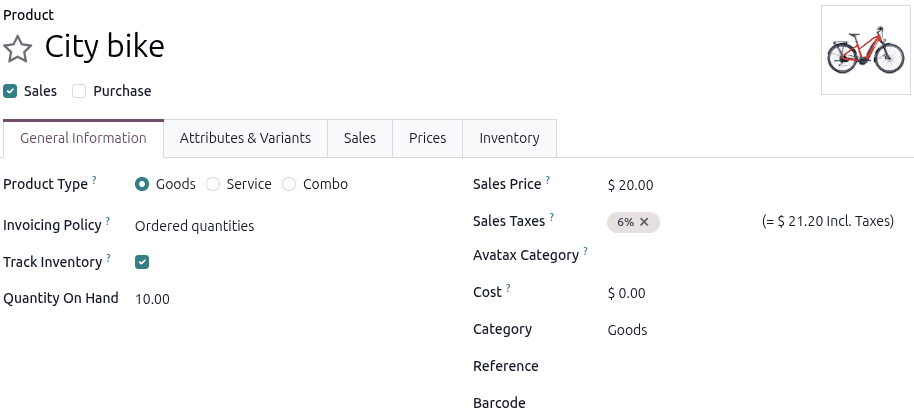
The most fundamental change is the explicit separation between physical and non-physical rental products. Previously, physical products were configured through a series of checkboxes and field combinations that weren’t always intuitive. Now, when creating a rental product, the “Goods” classification handles everything that involves stock movement: items that leave a warehouse when rented and return when the rental period ends.
The practical effect is that the system no longer asks rental operators to make decisions they shouldn’t have to think about. A bike rental company selects “Goods,” enables inventory tracking, and moves on. The warehouse integration, transfer generation, and stock counting all follow from that single classification.
Tracking Goes Beyond Serial Numbers
One of the notable changes is how inventory tracking options have expanded. The previous setup funneled physical rental products into serial-number tracking, which made sense for high-value equipment but was overkill for commodity rentals. The new configuration offers three explicit options:
- By Quantity— for fungible items where individual units don’t need distinction. A party supply company renting out folding chairs doesn’t need to know which specific chair went where.
- By Lots— for batch tracking where groups of items share an identity. A construction equipment rental company might track a batch of identical generators purchased together.
- By Unique Serial Number— for high-value items where individual identity matters. Camera equipment, vehicles, medical devices.
This granularity matters because it directly affects operational overhead. Forcing serial-number tracking on every rental item creates unnecessary scanning and data entry at the counter. Quantity-based tracking for commodity items eliminates that friction while still maintaining accurate stock counts.
Variants Finally Make Sense for Rentals
The addition of proper variant support through an Attributes & Variants tab brings rental product configuration in line with how physical products work elsewhere in Odoo. A ski rental shop can now configure a single “Ski” product with size, brand, and performance-level attributes rather than creating separate products for every combination.
This sounds basic, and it is — for sales products. But rental products have historically been an afterthought in variant systems because the pricing model is fundamentally different. You’re not selling the item; you’re selling time with the item. The challenge is making variants interact correctly with rental-specific pricing, and this update addresses that by connecting the Prices tab directly to pricelist rules that respect the product’s configured periodicity.
Pricing That Doesn’t Fight Itself
The pricing overhaul addresses a pain point that rental operators have dealt with since the module launched: the relationship between base price, rental periodicity, and pricelist rules. The new system establishes a clear hierarchy.
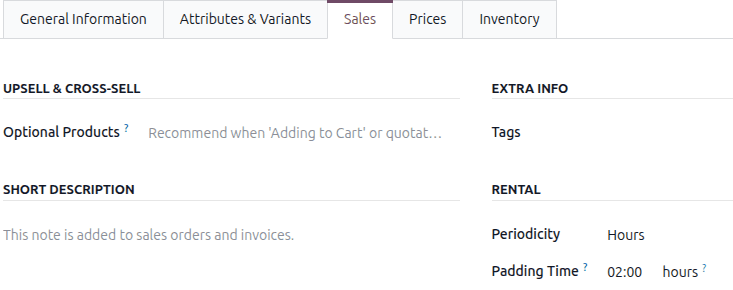
The base rental rate is set on the product’s General Information tab as the Sales Price. The periodicity — hourly, daily, weekly, monthly — is configured in the Sales tab. Additional pricing tiers for longer or shorter periods are handled through either pricelist rules or the product’s Prices tab, but all are constrained to the configured periodicity unit.
In other words, if a product is configured for hourly rentals, all its pricing rules work in hours. No more confusion about whether a “daily” rate on a product configured for hourly periodicity means 24 hours or a calendar day. The system enforces consistency at the configuration level rather than hoping operators get it right at the pricing level.
eCommerce Gets Pickup and Return Windows
For businesses that take rental orders online, the update adds explicit Pickup and Return time fields that appear when the eCommerce module is installed. These fields control the booking windows available to customers on the website — when items can be picked up and when they must be returned.
The practical application is straightforward: a paddleboard rental shop at a resort can specify that pickups happen between 8 AM and 6 PM and returns must be completed by 7 PM. Online customers see available time slots that respect these constraints rather than being able to book a 3 AM pickup that nobody can fulfill.
The one exception is hourly rentals, where the pickup and return fields don’t appear. The system assumes that hourly rentals are inherently time-bounded and don’t need the same windowing logic.
What This Means for Rental Operators
The sum of these changes is a rental product configuration that finally respects the diversity of rental business models. A luxury yacht charter and a party tent rental company have fundamentally different needs around tracking, pricing, and availability. The previous one-size-fits-all approach forced compromises on both.
The new structure lets each business configure products that match their operational reality. Commodity items get quantity tracking and simple periodic pricing. High-value equipment gets serial tracking and tiered rates. Online bookings get time-windowed availability. And all of it works within the same rental order workflow, using the same warehouse transfers and invoicing mechanisms.
For existing Odoo Rental users, the migration path involves reviewing product configurations to take advantage of the new tracking and pricing options. For businesses evaluating rental management software, the gap between Odoo’s built-in Rental module and dedicated rental platforms just narrowed considerably.