Invoice factoring is one of those financial mechanisms that sounds complicated on paper but is utterly routine in practice — especially in Chile, where it’s a cornerstone of how small and mid-sized businesses manage cash flow. The basic idea: a company sells its unpaid invoices to a factoring company at a discount, gets cash immediately instead of waiting 30, 60, or 90 days, and the factoring company collects from the original customer. Simple enough. But the paperwork and electronic compliance around it in Chile? That’s where things get dense.
Odoo has now shipped a dedicated module — l10n_cl_edi_factoring— that handles the entire factoring lifecycle natively, from generating the legally required electronic cession file to posting the right accounting entries and marking invoices as yielded. For Chilean businesses that have been cobbling this together with spreadsheets and manual SII submissions, this is a significant workflow collapse.
Why Factoring in Chile Requires Dedicated Tooling
In most countries, factoring is a contractual arrangement between two parties. In Chile, it’s a regulated electronic process. When a business cedes an invoice to a factoring company, it must generate an AEC (Archivo Electrónico de Cesión) — an electronic cession file that formally transfers ownership of the receivable. This file gets submitted to Chile’s tax authority, the SII (Servicio de Impuestos Internos), which tracks invoice ownership across the economy. Without the AEC, the cession isn’t legally recognized.
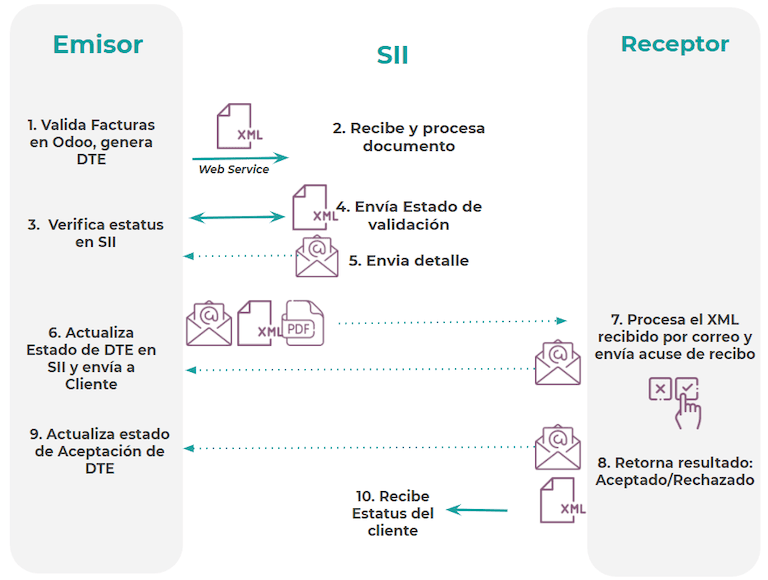
This means any ERP that wants to support Chilean factoring can’t just record a journal entry and call it done. It needs to generate the AEC in the correct XML format, tie it to the original electronic invoice (DTE), handle the factoring company as a specific contact type with proper RUT configuration, and update the invoice’s payment status to reflect that it’s been yielded rather than paid directly.
How the Module Actually Works
Once enabled, the factoring module adds a cession workflow to customer invoices. A business selects the invoices it wants to factor, specifies the factoring company (which must be configured as a contact with a valid RUT), and triggers the AEC generation. The system creates the electronic cession file tied to the original DTE, which can then be submitted to the SII.
On the accounting side, the module posts entries that reflect the economic reality of the transaction: the receivable moves from the original customer to the factoring company, and any commission or discount gets recorded as a financing expense. The invoice’s payment status updates to “Yielded,” which is a distinct state from “Paid” or “Partial” — an important distinction for financial reporting and audit trails.
The Compliance Details That Matter
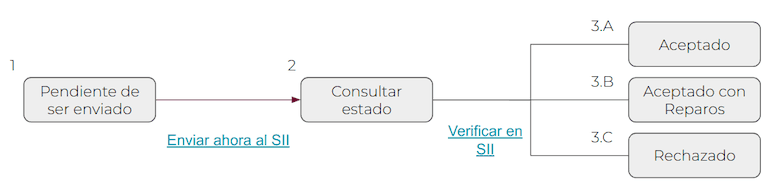
Chile’s electronic invoicing system is one of the more mature in Latin America. Every invoice passes through the SII for validation, every DTE has a tracked lifecycle, and every cession must be electronically registered. The factoring module fits into this existing infrastructure rather than working around it.
The module also aligns with updated documentation conventions: “Tax ID” references throughout the Chilean localization now use “RUT” (Rol Único Tributario) consistently, taxpayer type labels have been standardized, and the navigation paths for configuring company information have been tightened to match current menu structures.
Who This Impacts
Any Chilean business running Odoo that uses factoring — and that’s a significant portion of the SME market — now has a native path instead of a manual one. The module has been available since version 18, but the official documentation and configuration guidance have just landed, which means implementation partners and in-house teams can finally deploy it with proper reference material.
For businesses outside Chile, this is another signal that Odoo’s fiscal localization strategy isn’t surface-level. When a country’s financial infrastructure demands specific electronic workflows, Odoo is building dedicated modules rather than offering workarounds. The Dominican Republic got full e-invoicing support recently. Croatia got eRačun compliance. Chile now gets factoring. The pattern is clear: localization means matching how business actually operates in each market, not just translating field labels.