Every sales manager has the same problem: how do you keep a team motivated when the work is fundamentally repetitive? Call, qualify, demo, close, repeat. The pipeline is a grind, and even the best reps hit walls where the next cold call feels like pushing a boulder uphill. Most CRMs solve this by throwing dashboards at the problem — here are your numbers, here’s your quota, good luck.
Odoo took a different route. The CRM module now includes a full gamification engine that turns pipeline activity into something that looks a lot more like a game — with badges, leaderboards, team challenges, and automated rewards tied to real business outcomes.
How the Gamification Engine Actually Works
The system operates on three layers: goals, challenges, and badges. Goals are the atomic unit — a measurable target like “generate 20 qualified leads this month” or “close $50,000 in revenue this quarter.” Goals can be tied to any measurable field in the CRM, from opportunity count to expected revenue to activities completed.
Challenges wrap goals into structured competitions. A challenge might pit individual reps against each other, or set a team-wide target that everyone works toward collectively. Challenges have start and end dates, scoring rules, and visibility settings that determine whether results are public or private. Managers can run monthly sprints, quarterly pushes, or always-on competitions that reset automatically.
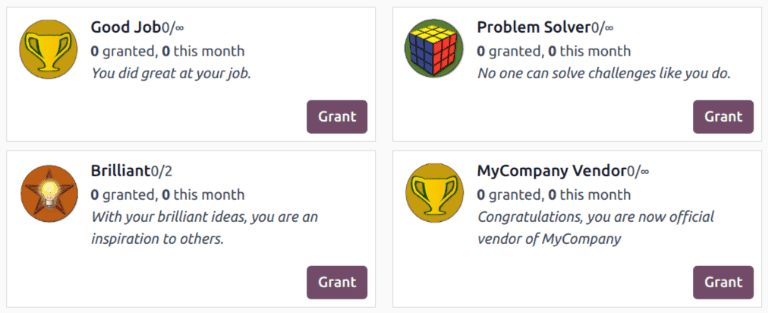
Badges are the reward layer. When a rep hits a goal or wins a challenge, they earn a badge that shows up on their profile. Badges can be purely cosmetic — bragging rights on a leaderboard — or they can be tied to tangible rewards through whatever incentive program the company runs externally. The system tracks badge history, so long-tenured reps accumulate a visible track record of their accomplishments.
The Leaderboard Changes the Dynamic
The leaderboard is where the psychology kicks in. Reps can see exactly where they stand relative to their peers, updated in real time as deals move through the pipeline. This isn’t a monthly report that lands in an inbox and gets ignored — it’s a live ranking embedded in the tool they already use every day.
What makes this effective is the granularity. The leaderboard doesn’t just show total revenue. Managers can configure it to rank reps by activities completed, leads converted, average deal size, or any custom metric that matters to the business. A rep who closes fewer deals but works larger accounts can still rank well if the leaderboard weights revenue over volume.
There’s also a social element. When someone earns a badge or completes a challenge, it’s visible to the team. This creates a lightweight peer recognition loop that doesn’t require management intervention — the system handles the acknowledgment automatically.
Setting Up Challenges That Actually Drive Behavior
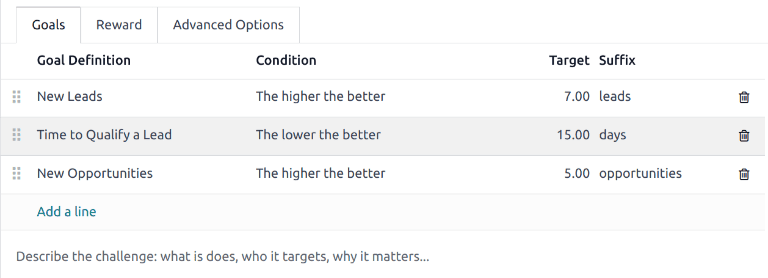
The configuration is straightforward but flexible. From the CRM settings, managers enable the gamification module, then navigate to the Challenges menu to create competitions. Each challenge requires a goal definition, a participant list (which can be a specific sales team, a department, or the entire company), and a scoring period.
The smart part is how goals connect to CRM data. Instead of manually tracking progress, the gamification engine pulls directly from the pipeline. A goal like “move 15 opportunities past the qualification stage” evaluates itself automatically based on stage transitions in the CRM. No spreadsheets, no manual updates, no arguments about whether a deal counts.
Managers can also create tiered challenges — bronze, silver, gold levels within the same competition — so that mid-tier performers still have something achievable to aim for. This avoids the common problem where gamification systems only reward the top performer and demotivate everyone else.
Why This Matters Beyond the Fun Factor
Gamification in sales tools isn’t new. Enterprise CRMs have offered third-party gamification add-ons for years, and standalone platforms like Ambition and LevelEleven have built entire businesses around the concept. What’s different about Odoo’s approach is that it’s native. There’s no third-party integration to maintain, no API connector that breaks when either side pushes an update, and no additional licensing cost.
The data stays inside the CRM. Reps see their badges and rankings in the same interface where they manage their pipeline. Managers configure challenges in the same settings panel where they set up sales teams and territories. The gamification isn’t bolted on — it’s woven into the existing workflow.
For teams that have been running informal competitions on whiteboards or shared spreadsheets, this replaces a manual process with something that scales. For teams that haven’t tried gamification at all, it lowers the barrier to experimenting with it. Either way, the sales pipeline becomes a little less of a grind and a little more of a game — which, if the behavioral science research is any indication, tends to make people sell more.