Shopify merchants have had access to product recommendation engines, loyalty widgets, and review automation for years — but always through third-party apps that add monthly costs and introduce integration headaches. Odoo has been building eCommerce features steadily, but certain conversion staples were missing from the toolkit. That gap just closed significantly.
Odoo 19.3 ships six conversion-focused features directly into the eCommerce module. No app store purchases. No API configuration. No per-transaction fees. They activate from the module settings and start working immediately.
Automated Cross-Sell That Reads Your Product Catalog
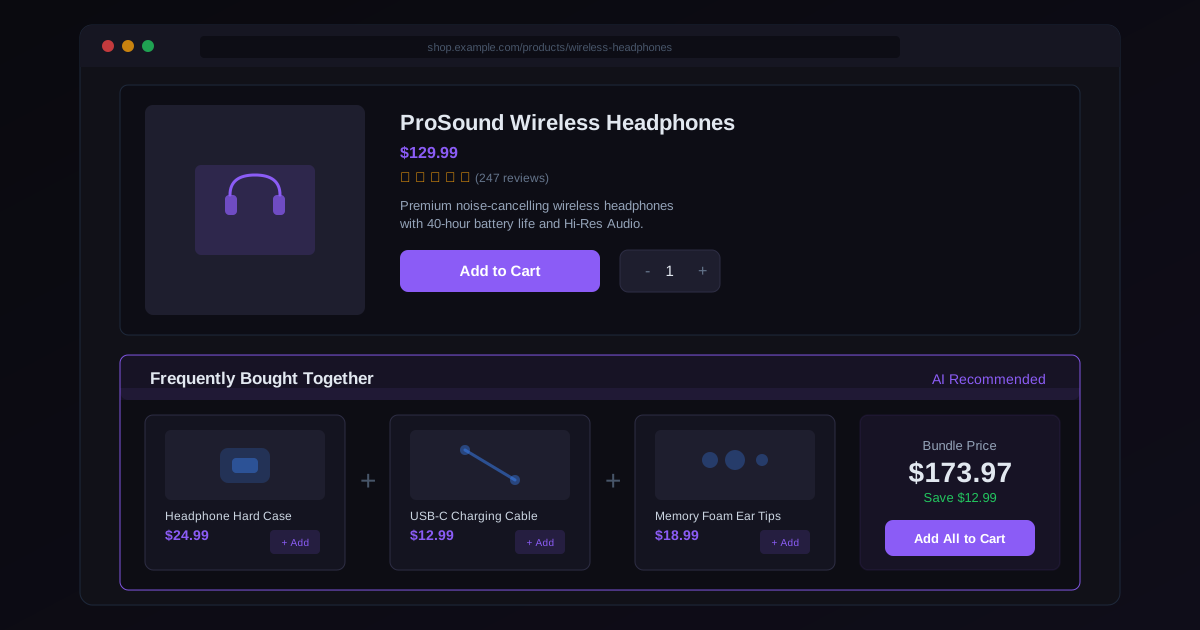
The cross-sell engine examines your product relationships — accessories, alternatives, and optional products defined on each product form — and surfaces them automatically on product pages and during checkout. A customer adding a laptop to their cart sees compatible chargers, carrying cases, and extended warranty options without anyone manually building those recommendation blocks.
What makes this different from a basic “related products” widget is the automation. Previously, merchants had to manually tag cross-sell relationships on every product. The new system infers suggestions from purchase history, product categories, and existing accessory configurations. If a charger is listed as an accessory for three different laptop models, it appears as a cross-sell on all three product pages automatically.
For stores with hundreds or thousands of products, this eliminates a substantial maintenance burden. Cross-sell suggestions stay current as the catalog evolves, without anyone revisiting product pages to update recommendation blocks.
The Loyalty Progress Bar That Nudges Bigger Carts
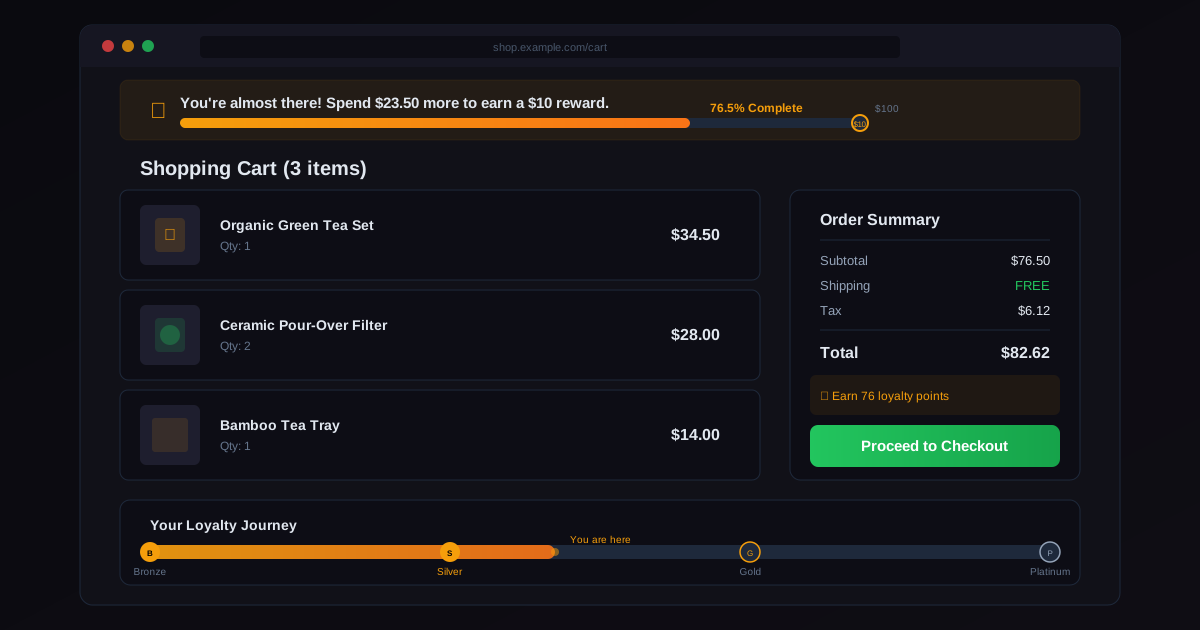
The loyalty progress bar appears in cart notifications and the cart summary page, showing customers exactly how close they are to unlocking their next reward. Spend another twelve dollars and get free shipping. Add one more item and earn double points. The bar fills visually as the cart value increases, creating a natural incentive to add rather than remove.
This connects directly to Odoo’s existing Loyalty and Promotion programs. Any reward threshold configured in the loyalty module — whether it is a discount, free shipping, or a gift product — automatically generates the corresponding progress indicator in the cart. Merchants define the rules once in the loyalty program, and the progress bar reflects them everywhere the cart appears.
The effect on average order value is well-documented in eCommerce research. Showing customers how close they are to a reward consistently lifts AOV because removing items from the cart feels like losing progress. It is a psychological lever that Shopify merchants have been using through apps like Smile.io for years. Now it comes native in Odoo.
Post-Purchase Review Requests on a Timer
Odoo now sends automated review request emails after order delivery, with a configurable delay that merchants set in the eCommerce settings. The timing matters: ask too early and the customer has not tried the product yet. Ask too late and the purchase is forgotten. The default is seven days after order confirmation, but businesses selling products that take longer to evaluate — skincare, electronics, subscription boxes — can extend the window.
The email template is editable and includes a direct link to the product review form. Reviews submitted through this flow go through the same moderation pipeline as on-site reviews, and approved reviews appear on the product page with the verified purchaser badge.
For SEO, this is significant. Product pages with reviews rank better in search results, and the structured data that Odoo generates for reviews can surface star ratings in Google Shopping and organic search snippets. Automating the collection of those reviews turns a one-time feature into a compounding advantage.
Preferred Delivery Dates
Customers can now select when they want to receive their order during checkout. The available dates are calculated from the delivery method’s configured lead time and any blackout dates the merchant has set. If a product requires three business days to ship and the merchant does not deliver on weekends, the earliest selectable date reflects that constraint automatically.
This addresses a persistent frustration in B2B eCommerce especially, where buyers need deliveries to align with receiving schedules, warehouse staffing, or production timelines. Instead of adding a note to the order and hoping someone reads it, the delivery date becomes a structured field that flows into the picking operation.
Age Verification for Regulated Products
The age verification gate is a configurable popup that appears before customers can access specific product categories. Wine, spirits, tobacco, vaping products, certain supplements — any category where the merchant needs to confirm the buyer meets a minimum age threshold. The popup asks for date of birth or a simple yes/no confirmation depending on the merchant’s regional requirements, and the response is stored in the session so returning visitors are not asked repeatedly.
What This Means for the Platform
These are not breakthrough features individually. Cross-sell, loyalty nudges, review automation, delivery scheduling, and age gates have existed in the Shopify ecosystem for years. But each one required a separate app, a separate subscription, and a separate integration point. A Shopify merchant running all five capabilities might pay fifty to a hundred dollars per month in app fees alone, plus the overhead of managing five different vendor relationships.
Odoo building them natively means they share the same database, the same product catalog, the same customer records, and the same analytics pipeline. The cross-sell engine knows what the loyalty program is offering. The review request system knows when the delivery actually happened. The age gate connects to the same product categories that power inventory and accounting. That integration depth is the advantage that an all-in-one ERP brings to eCommerce — and with this release, Odoo is starting to use it.