Sustainability reporting has gone from a nice-to-have annual PDF to a legal obligation for thousands of European companies. The EU’s Corporate Sustainability Reporting Directive now requires detailed disclosures on environmental impact, workforce conditions, and governance structures — and the deadlines are already hitting mid-size companies that never had to think about carbon accounting before.
Odoo’s response is not a third-party integration or an accounting add-on. It is a standalone ESG application that lives inside the main module menu, pulls data from across the ERP, and produces the kind of structured sustainability metrics that auditors and regulators actually want to see.
Three Pillars, One Dashboard
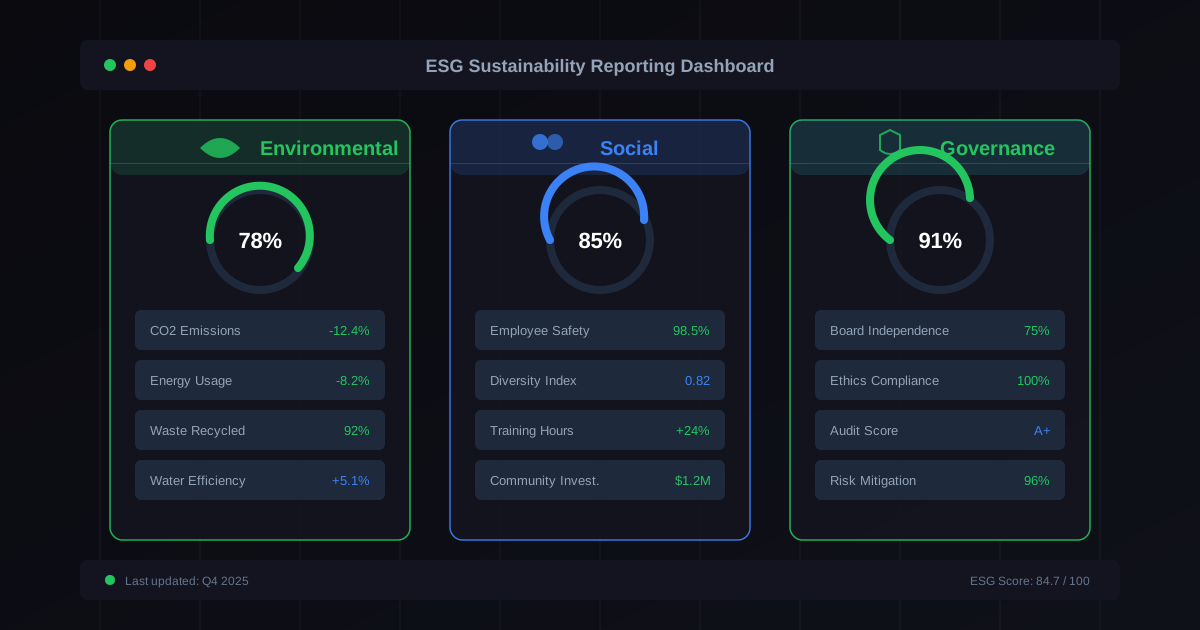
The module organizes everything around the three pillars that give ESG its name. The Environmental section tracks energy consumption, waste generation, water usage, and greenhouse gas emissions. The Social section covers employee diversity statistics, workplace safety incidents, training hours, and community investment. The Governance section documents board composition, ethics policy adherence, data privacy compliance, and anti-corruption measures.
Each pillar gets its own dashboard with KPI cards that update as data flows in from other Odoo modules. Manufacturing orders feed energy consumption figures. HR records supply diversity and training data. Purchase orders contribute supply chain emissions estimates. The result is a sustainability picture that builds itself from operational data rather than requiring someone to manually compile numbers at the end of each quarter.
Carbon Footprint Tracking That Actually Uses Your Data
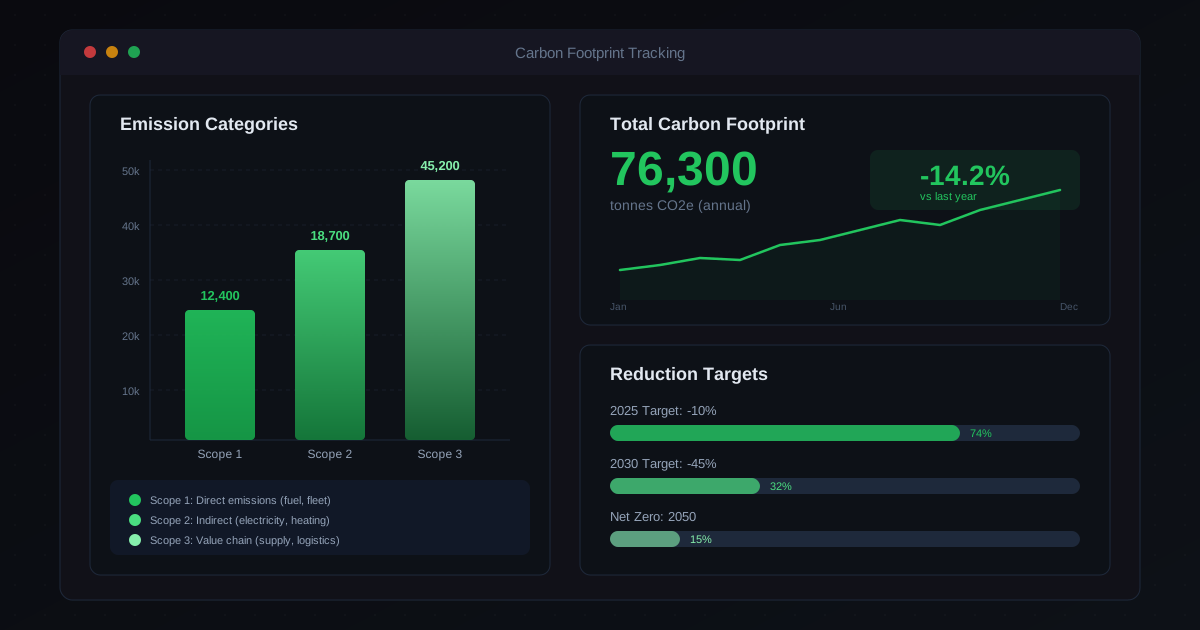
The carbon tracking component breaks emissions into the three scopes that climate disclosure frameworks require. Scope 1 covers direct emissions from company-owned facilities and vehicles. Scope 2 handles indirect emissions from purchased electricity, heating, and cooling. Scope 3 — the hardest to measure and the one most companies struggle with — estimates upstream and downstream supply chain emissions using purchase order data and configurable emission factors.
Emission factors are configurable per product category, per supplier, and per geographic region. When a purchase order is confirmed, the system multiplies the quantity by the assigned emission factor and rolls the result into the Scope 3 total. The same logic applies to logistics: shipping methods carry their own emission coefficients, so a delivery order automatically contributes to the carbon calculation based on the carrier, distance, and shipment weight.
For Scope 1 and 2, companies can enter utility bills, fuel consumption records, and fleet mileage directly into the module or import them from spreadsheets. The system converts everything into CO2 equivalents using the emission factor database and aggregates the results into monthly, quarterly, and annual summaries.
Automated Reporting for CSRD and GRI
The reporting engine generates structured outputs aligned with CSRD requirements and GRI (Global Reporting Initiative) standards. Rather than producing a single monolithic report, it creates modular disclosure sections that can be assembled into the format a specific regulation demands.
Each disclosure section includes the data point, the source records that feed into it, the calculation method used, and a confidence level indicator. Auditors can trace any reported number back to the original transaction in Odoo — a purchase order, a manufacturing run, an HR record — without leaving the system. That audit trail is the difference between a sustainability report that passes scrutiny and one that gets flagged for insufficient documentation.
Why an ERP-Native Approach Changes the Game
Most companies today handle ESG reporting with standalone tools that require manual data collection from multiple systems. Finance sends a spreadsheet. HR sends another. Operations contributes a third. An ESG consultant stitches them together, discovers inconsistencies, sends follow-up emails, and eventually produces a report that is already outdated by the time it is published.
Building ESG directly into the ERP eliminates that cycle. The data is already there. Every purchase, every payroll run, every manufacturing batch, every fleet trip — it all exists in the system. The ESG module simply reads from those records and applies the appropriate sustainability lens.
The real leverage comes from the connection to operational decisions. When a procurement manager sees that switching to a local supplier would reduce Scope 3 emissions by 15%, that insight sits right next to the purchase order form. When a plant manager notices that electricity consumption spiked during a specific production run, the manufacturing order is one click away. Sustainability stops being a backward-looking compliance exercise and starts informing the decisions that actually reduce environmental impact.
What This Means for Mid-Size Companies
Large enterprises have been investing in dedicated ESG platforms for years. But the CSRD expansion is pulling thousands of mid-size companies into the reporting mandate for the first time — companies that do not have ESG departments, do not have six-figure software budgets for sustainability tools, and do not have the staff to maintain yet another standalone system.
For those companies, an ESG module that lives inside their existing ERP and feeds on data they are already generating is not just convenient. It is the difference between meeting the compliance deadline and scrambling to catch up. The module ships as part of the Odoo Enterprise license, with no additional per-user fees for ESG functionality.