Most manufacturing businesses that use subcontractors have lived with an awkward logistics gap: they buy raw materials from one supplier, receive them into their own warehouse, then ship them out again to whoever actually assembles the product. It works, but it adds handling time, storage costs, and an entire unnecessary leg of transportation. Odoo has now formalized the alternative — a dropship-to-subcontractor route where vendors ship components directly to the third-party manufacturer, and the contracting company never physically touches the materials.
The workflow involves three parties: the company placing the order, the vendor supplying components, and the subcontractor performing assembly. What makes this interesting from a system design perspective is that Odoo generates and links the purchase documents automatically, so the coordination between all three parties happens through a single confirmed purchase order.
How the Routing Actually Works
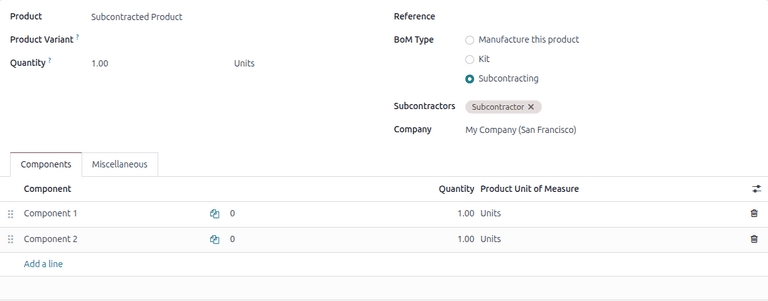
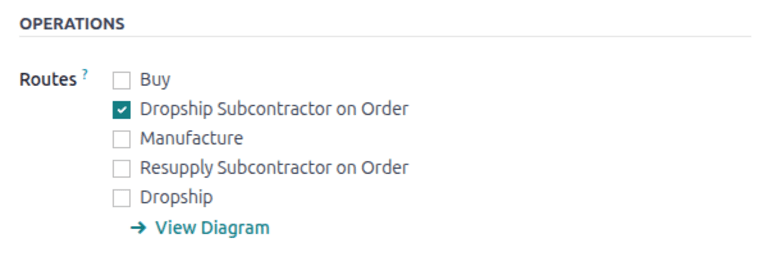
The setup starts with a bill of materials set to the Subcontracting type. Each component on that BoM gets assigned a specific inventory route called “Dropship Subcontractor on Order,” which tells the system to source that component directly from its vendor and deliver it to the subcontractor’s location rather than the company warehouse.
The product itself lists the subcontractor as its vendor in the Purchase tab, with a delivery lead time that encompasses the entire cycle: component receipt by the subcontractor, production time, and final delivery of the finished good back to the company. This single lead time field replaces what would otherwise require separate estimates for each stage of the process.
The Automated Document Chain
When a user creates and confirms a purchase order for the subcontracted product, the system does two things simultaneously: it generates a receipt document for the eventual finished good, and it creates a separate request for quotation addressed to the component vendor. That vendor RfQ specifies the subcontractor’s location as the delivery destination — not the company warehouse.
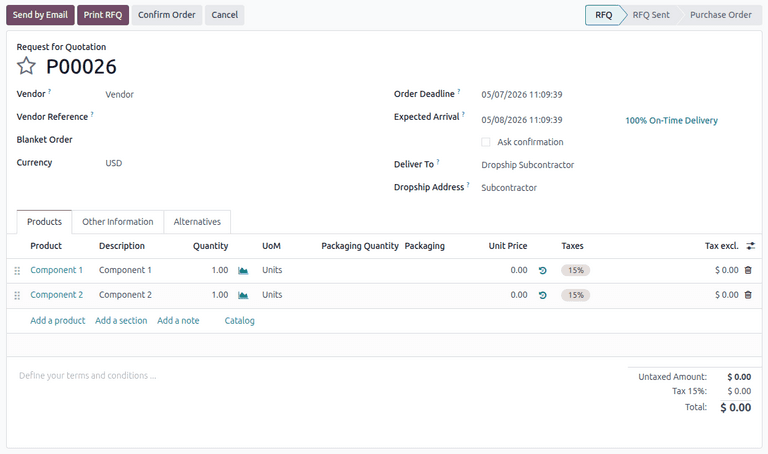
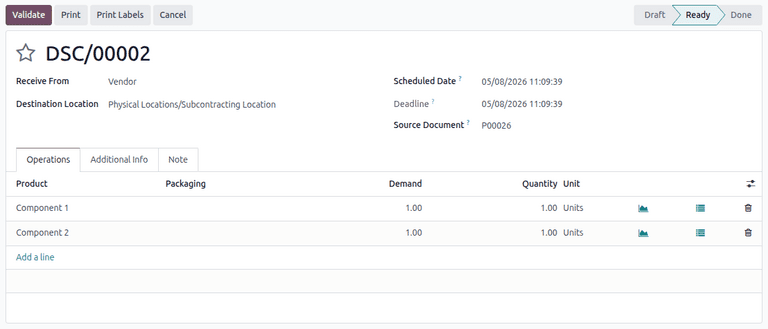
Confirming the vendor RfQ turns it into a purchase order, and a dropship transfer is created linking the vendor shipment to the subcontractor receipt. Validating this dropship order confirms that the subcontractor has received the materials and can begin production.
Tracking the Physical Reality
Behind the scenes, Odoo generates a series of inventory moves that mirror what happens physically. Components move from the vendor location to a dedicated Subcontracting Location. A virtual Production location then consumes those components and creates the finished good. The completed product sits at the Subcontracting Location until the company validates receipt, at which point it enters their actual warehouse stock.
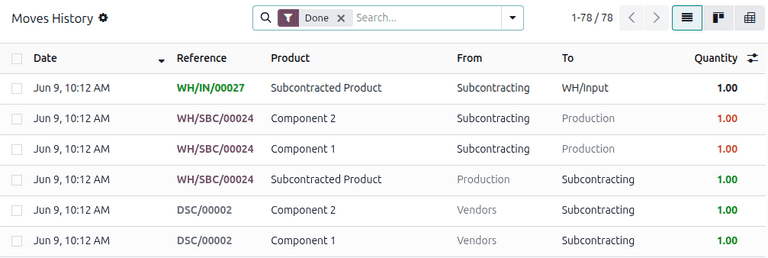
This is more than bookkeeping. The move chain means inventory valuation stays accurate through every stage, cost of goods sold reflects the actual component costs, and the audit trail shows exactly when materials changed hands between each party.
When This Makes Sense
The dropship-to-subcontractor route is particularly relevant for businesses that outsource assembly but don’t want to warehouse raw materials. Electronics companies ordering PCBs from one supplier and having them assembled by another. Furniture makers sourcing lumber from mills and sending it directly to finishing shops. Any scenario where the contracting company is essentially a coordinator rather than a physical handler of materials.
The alternative — the resupply route where the company receives components first, then ships them to the subcontractor — still exists for situations where quality inspection or consolidation from multiple vendors is necessary before sending materials out. But for straightforward supply chains with trusted vendors and subcontractors, eliminating the intermediate warehouse stop removes days from the production timeline and cuts freight costs in half.