
Paying vendor bills in most ERP systems follows a frustrating routine. The accountant reviews and approves the bill inside the system, then opens a separate banking portal, re-enters the payment details, waits for a second authentication prompt, confirms the transaction, and switches back to the ERP to mark the bill as paid. For companies processing dozens of vendor payments per week, this toggle between systems is not just tedious — it is a source of data entry errors, missed payments, and reconciliation headaches.
Odoo 19.3 eliminates the banking portal from that workflow entirely. Through a direct integration with Payment Initiation Service Providers — the open banking layer established by Europe’s PSD2 regulation — finance teams can now authorize vendor payments directly from the Odoo Accounting interface with a single digital signature.
How PISP Changes the Payment Flow
The mechanics are straightforward. When a vendor bill is validated and ready for payment, a new “Pay via Bank” button appears alongside the existing payment registration options. Clicking it initiates a payment request through the connected PISP, which communicates directly with the company’s bank. The bank sends a strong customer authentication challenge — typically a push notification to the finance manager’s mobile banking app or a biometric confirmation — and once approved, the payment executes immediately.
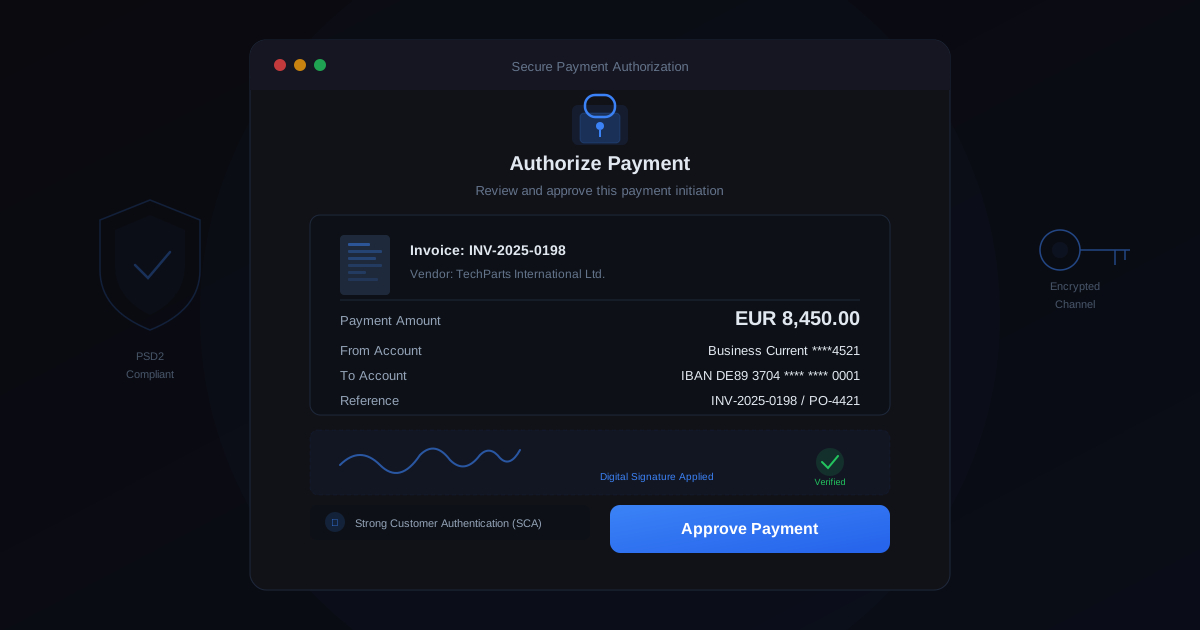
The payment status updates in Odoo in real time. The bill moves to “In Payment” as soon as the initiation is confirmed, and to “Paid” once the bank confirms settlement. No manual status updates. No reconciliation guesswork. The journal entry is created automatically, and the bank statement line matches on the next synchronization cycle.
Batch Payments That Actually Work
The real productivity gain comes with batch processing. Finance teams can select multiple vendor bills from the payables list, group them into a single payment batch, and initiate the entire batch through the PISP with one authorization. The bank processes each payment individually but presents them as a single approval request.
For companies that run weekly payment cycles — reviewing all due bills on Friday and paying them in one batch — this reduces the payment step from a multi-hour banking session to a five-minute review and a single mobile confirmation. The batch appears in the payment journal with individual lines for each vendor, maintaining the granularity that reconciliation needs while collapsing the authorization overhead.
No More Export-Upload-Import Cycles
Before this integration, the closest Odoo got to automated payments was SEPA file generation. The system would produce a PAIN.001 XML file, the accountant would download it, upload it to the banking portal, authenticate, confirm, and then return to Odoo to register the payment. That workflow still exists for banks that do not support PISP, but for supported institutions, the XML export step is now optional rather than required.
The elimination of file-based payment initiation removes an entire class of errors. Wrong file format. Stale bank details in the export. Duplicate uploads because someone was not sure if the first one went through. Files sitting in a downloads folder for days because the person who generated them went on vacation before uploading. These are mundane problems, but they cost real money in late payment penalties, duplicate payments, and staff time spent investigating discrepancies.
Security and Compliance
PISP operates under the same regulatory framework as any banking service in the European Economic Area. The provider is licensed and supervised by a financial authority, and every payment initiation requires strong customer authentication — the same two-factor standard that banks apply to their own portals. Odoo never stores banking credentials or has direct access to company bank accounts. The PISP acts as a regulated intermediary that initiates the payment on the company’s behalf after receiving explicit authorization.
For audit purposes, every PISP payment carries a complete trail: who initiated it in Odoo, when the bank authorization was requested, when it was confirmed, and the transaction reference from the bank. That trail lives in the journal entry and the payment record, giving internal and external auditors the same visibility they would have with any other payment method.
The Bigger Picture
Open banking has been technically available in Europe since PSD2 went into effect, but adoption in ERP systems has been slow. Most mid-market ERPs still treat payment as something that happens outside their borders — they generate the instructions, and someone else executes them. Odoo bringing PISP directly into the accounts payable workflow is a signal that the platform is serious about owning the full financial cycle, from invoice receipt to bank settlement.
For finance teams, the practical impact is measured in hours saved per week and errors eliminated per month. For CFOs, it is about cash flow visibility — knowing that a payment was executed the moment it was authorized, rather than discovering three days later that the XML file never made it to the bank.