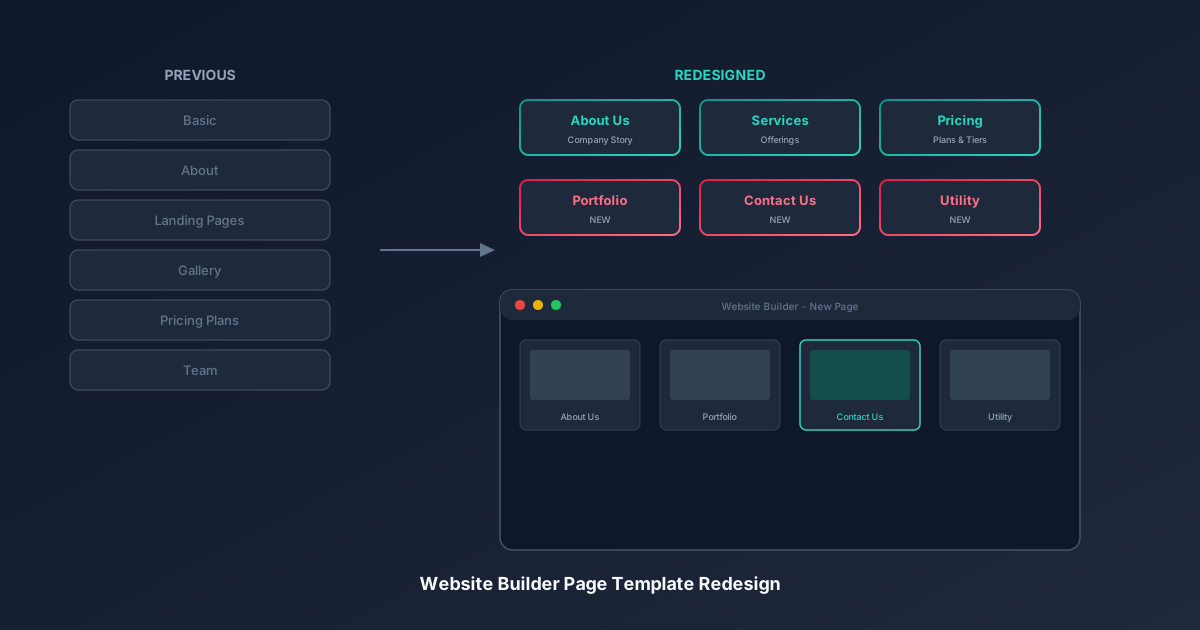
Every time someone creates a new page in Odoo’s Website Builder, they see the template picker — a grid of pre-designed layouts organized by category. It’s the first decision point in the page creation process, and until now, the categories guiding that decision were a leftover from an earlier era of web design thinking.
The old categories — Basic, About, Landing Pages, Gallery, Pricing Plans, and Team — mapped to visual patterns rather than business purposes. “Basic” told you nothing about what the page was for. “Gallery” assumed you wanted a photo grid without asking why. “Landing Pages” lumped together everything from product launches to newsletter signups under a single vague label.
The New Categories Reflect How Businesses Build Websites
The replacement set is smaller, more specific, and organized around the pages that every business website actually needs. Six categories replace six, but the thinking behind them is fundamentally different.
About Usreplaces the old “About” category with templates specifically designed for company story pages. The distinction is subtle but important: these aren’t generic text-and-image layouts. They’re structured around narrative elements — founding stories, team introductions, mission statements, and milestone timelines.
Services carries over from the previous set, which is telling. Service pages were already well-defined as a category because they serve a clear business function: describing what a company offers. The templates here focus on feature grids, benefit comparisons, and service-tier breakdowns.
Pricingreplaces “Pricing Plans,” dropping the word “Plans” because not every pricing page shows subscription tiers. Some businesses list per-item pricing, others show custom quote forms, and others display comparison tables. The simplified category name reflects that broader scope.
Three New Categories Fill Real Gaps
The more interesting changes are the three categories that didn’t exist before: Portfolio, Contact Us, and Utility.
Portfolioreplaces the old “Gallery” category, and the rename tells the story. A gallery is a visual pattern — images in a grid. A portfolio is a business purpose — showcasing work, case studies, or project examples. The templates shift accordingly, moving from pure image galleries to layouts that pair visuals with project descriptions, client logos, and outcome metrics.
Contact Us is entirely new, which is surprising given that a contact page is one of the most common pages on any business website. Previously, building a contact page meant starting from a generic template and manually adding a form, a map embed, and address details. Now there are purpose-built templates that include these elements by default.
Utilityis the catch-all for pages that serve functional purposes rather than marketing ones — terms and conditions, privacy policies, 404 pages, under-construction notices, and similar structural content. These pages previously had to be built from “Basic” templates, which provided no useful starting structure. The Utility category finally gives them a home.
What Got Removed (and Why It Does Not Matter)
Three old categories are gone: Basic, Landing Pages, and Team. “Basic” was too vague to be useful — every template is basic until you add content to it. “Landing Pages” was too broad — a landing page for a product launch has nothing in common with a landing page for a webinar registration except the marketing buzzword. “Team” was too narrow — team pages are typically sections within About Us pages, not standalone pages.
The landing page use case isn’t abandoned; it’s absorbed into the other categories. A product launch page is a Services template with different content. A pricing comparison landing page is a Pricing template. An event signup page is a Contact Us template with a registration form. The categories now describe what the page does for the business, not what marketing category it falls under.
Impact on Existing Websites
This change affects the template picker — the interface you see when creating a new page. Existing pages built from old templates continue working exactly as before. There’s no migration required and no visual changes to published content.
For theme developers who register custom page templates, the change is more significant. The template group identifiers have changed, so any custom template that registered itself under the old “Gallery” or “Team” group needs to be updated to use the new category names. It’s a straightforward find-and-replace in the template XML, but it’s a breaking change for anyone maintaining custom themes.
A Small Change That Compounds
Reorganizing template categories sounds like a minor UI tweak, and in isolation, it is. But the template picker is the first thing every new Odoo website builder user encounters, and the categories they see shape their mental model of what the tool can do. Categories like “Basic” and “Landing Pages” communicated that the builder thinks in web design abstractions. Categories like “About Us,” “Portfolio,” and “Contact Us” communicate that the builder thinks in business outcomes.
That framing difference affects how confidently a non-technical user approaches the tool. A marketing manager who needs a contact page can now find “Contact Us” in the template picker and start with something functional. Previously, the same person would see “Basic” and wonder if this tool was really meant for them. The templates haven’t changed as much as the navigation to reach them, but that navigation is where most of the user friction lives.